

Have you noticed how filling up your car can suddenly become more expensive, or wondered why the cost of food and everyday products keeps rising? Oil prices can play a bigger role in your daily life than you might think.
Oil is used to produce fuel for cars, trucks, ships and planes. When oil becomes more expensive, transporting food to supermarkets, delivering online orders and running businesses can also cost more. These extra expenses can eventually be passed on to consumers.
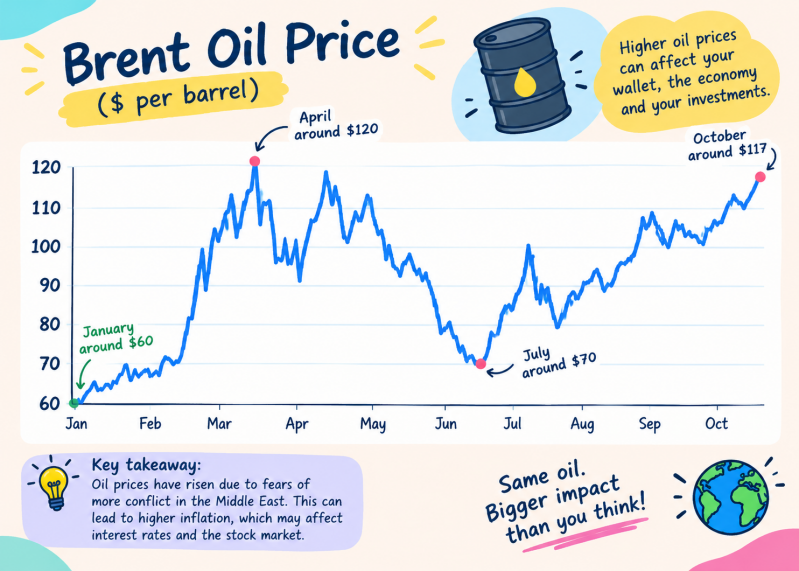
Oil prices have now climbed to $117 a barrel for the first time since April, as fears grow that the conflict involving the US, Israel and Iran could escalate. But what does this mean for your wallet and your investments?
Why Are Oil Prices Rising?
Brent crude, a major international oil benchmark, reached $117.45 a barrel before settling at $116.72.
Investors are worried that further conflict could disrupt oil supplies, particularly through the Strait of Hormuz, an important shipping route in the Middle East.
If oil deliveries are disrupted, supplies could become tighter and prices could rise further.
How Could Higher Oil Prices Affect Your Daily Life?
Higher oil prices can affect household budgets in several ways:
- Petrol and diesel: Filling up your car could cost more, leaving less money for other expenses.
- Food shopping: Farmers, food producers and delivery companies face higher fuel and transport costs, which can push supermarket prices up.
- Flights and holidays: Airlines may face higher fuel bills and increase ticket prices.
- Online shopping: Delivering goods can become more expensive, potentially leading to higher delivery charges or product prices.
When these costs rise across the economy, inflation can increase. This means your money may not buy as much as it did before.
What Does This Mean for Investors?
If inflation rises, the US Federal Reserve may delay interest rate cuts. Higher interest rates can make borrowing more expensive and put pressure on stock prices.
Energy companies may benefit from higher oil prices, while airlines, transport businesses and consumer-focused companies may struggle with rising costs.
Key Takeaways
Oil prices affect much more than petrol stations. They can influence food prices, holidays, household budgets and investments. Investors should watch oil prices and geopolitical developments while remembering that markets can change quickly. Avoid making investment decisions based on headlines alone.