

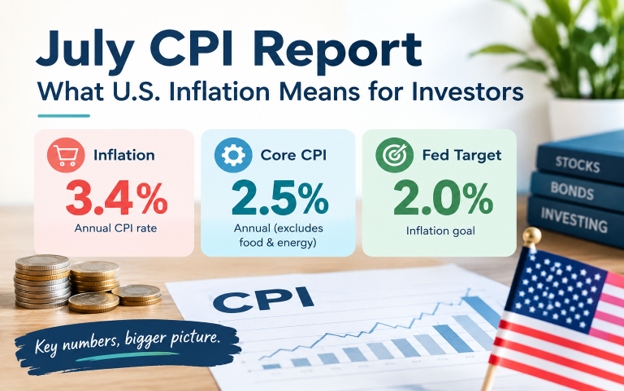
The latest July CPI report gave investors some encouraging news, but inflation remains above the Federal Reserve’s 2% target.
The Consumer Price Index increased 0.1% in July, bringing annual inflation to 3.4%. Core CPI, which excludes food and energy prices, rose 0.2% for the month and 2.5% from a year earlier.
The results were broadly in line with expectations and helped strengthen the view that inflation may be slowing.
Oil Prices Remain a Risk
Falling energy prices have helped keep inflation under control. The CPI energy index is down around 7% from its May peak.
However, crude oil prices have recently risen about 10% in one week. If oil prices remain elevated, they could push consumer prices higher in the coming months, particularly if Middle East tensions continue.
What Does This Mean for the Fed?
The softer inflation data, combined with weaker July employment figures, reduced expectations for a September interest rate hike.
Markets were pricing in around a 38% chance of a rate hike at the Fed’s September meeting, compared with roughly 70% a month earlier.
The Takeaway
The July CPI report suggests that U.S. inflation may be cooling, but the problem is not over. Investors should watch oil prices, shelter costs, employment data and upcoming inflation reports.
For now, softer inflation has reduced pressure on the Fed to raise rates immediately, but future data will remain crucial.